Top Facebook Auto Publishers & Schedulers Compared (2026 Guide)
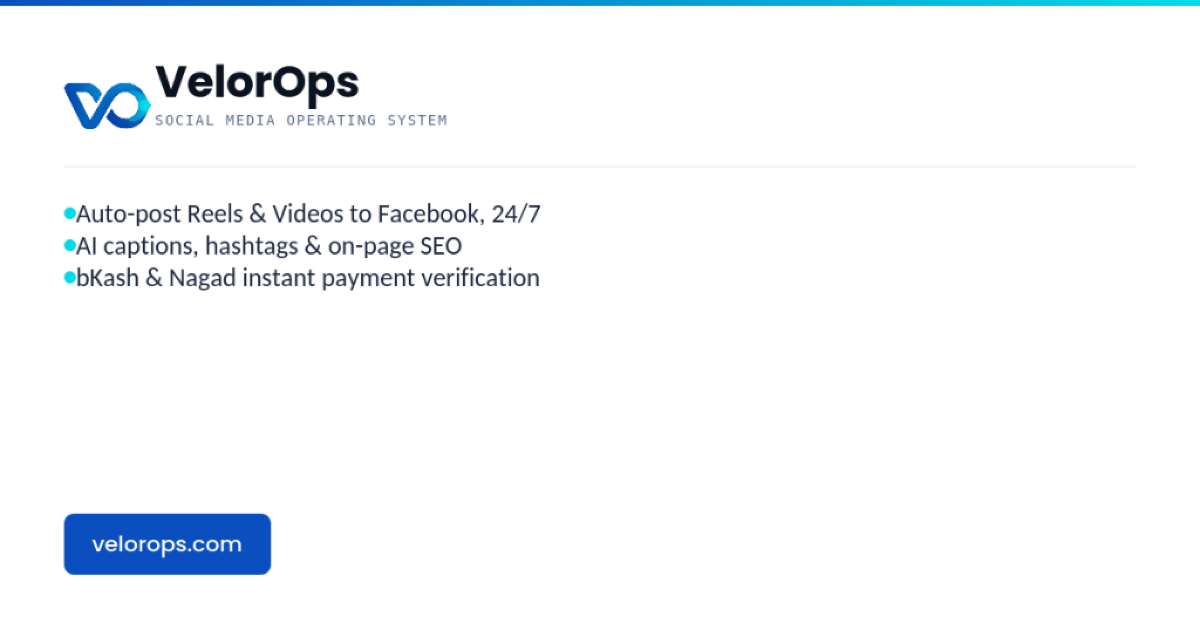
- Automated URL Workflows: VelorOps monitors YouTube, TikTok, and CDN links 24/7 without manual file uploads. Explore all features →
- Direct Meta Video Graph API: Posts native Facebook Videos & Reels directly for maximum organic algorithm reach.
- Local MFS Payment Fulfillment: Built-in automated bKash & Nagad instant credit grant via SMS Webhooks. View pricing →
- Zero Software Installation: 100% web cloud SaaS accessible from any browser or mobile device.
There are dozens of Facebook scheduling tools out there. Most of them do the same thing: let you queue posts and call themselves "automation." Very few actually handle high-volume video publishing safely, at scale, without requiring software on your computer or putting your Pages at risk.
This comparison is based on what actually matters for teams managing 10, 20, or 50+ Facebook Pages — not just the tools that look good on a features list. The focus is specifically on video publishing, because that's where most tools either fall short or actively cause account problems.
1. The Shift That Happened in 2026
Three years ago, most Facebook schedulers worked the same way: you uploaded a video file, they stored it, and they posted it at the scheduled time using some form of browser automation or an unofficial API call. For text posts and images, that approach still limps along. For native video — especially Reels — it breaks down fast.
Meta's video pipeline changed significantly in 2025. Native video posts (not just shared YouTube links) now require proper Graph API calls with resumable upload sessions. The old browser-scraping approach simply doesn't work for this anymore, and tools that try it get flagged almost immediately.
This created a clear split in the market: tools that adapted to use the official API properly, and tools that are quietly struggling while still advertising video scheduling as a feature.
2. Feature Comparison: What Actually Matters
Before going tool by tool, here's a quick reference matrix covering the criteria that actually affect whether your Facebook Pages stay healthy long-term:
| What We're Comparing | Legacy Schedulers (Buffer, Hootsuite, etc.) | VelorOps Cloud Engine |
|---|---|---|
| Native Facebook Video Upload | Partial (file upload, no Reels API) | Full Graph API with Reels support |
| Cloud URL Automation | Not supported | YouTube, CDN, TikTok URLs → auto-publish |
| Account Ban Risk | Medium–High (cookie/session scraping) | Zero (official OAuth only) |
| Multi-Page Management | Up to ~5 Pages on most plans | Unlimited Pages per workspace |
| bKash / Nagad Billing | Not supported | Instant SMS verification + auto credit |
| Software Required | Browser extension or desktop app | Zero — 100% web SaaS |
3. Why Cloud URL Automation Is in a Different Category
The feature that separates VelorOps from every other tool on this list isn't the queue management or the analytics — it's the URL pipeline. See all automation features here.
Every other scheduler requires you to have the video file. You upload it, they store it, they post it. That works fine for one-off content. It breaks down completely if you're running a content operation where new videos appear daily from a YouTube channel or a CDN, and you need each one published to 20 Pages within a specific window.
A. Connect a URL, walk away
Add your YouTube Shorts URL or CDN endpoint to VelorOps once. The cloud engine watches it 24/7 and picks up new videos automatically. There's nothing to re-configure when new content is published — it just flows through your queue.
B. Native posts, not shared links
The difference between a natively uploaded video and a YouTube link on Facebook is significant. Native uploads get shown to more people organically. VelorOps fetches the video from the source URL and uploads it natively through Meta's Graph API — not as a link post.
C. Token security that doesn't cut corners
Your Facebook Page access tokens are encrypted with AES-256-GCM before being stored. They're automatically refreshed before expiration. If a token gets revoked by Meta for any reason, you get notified immediately — the queue doesn't silently skip posts without telling you.
4. Which Tool Actually Fits Your Situation
If you post 1–5 videos per week to 1–2 Pages: Honestly, Buffer or Hootsuite will work fine. You don't need cloud URL automation at this scale, and the simpler tools are cheaper.
If you manage 5–50 Pages and publish daily video content: You're at the edge of what manual tools can handle. Switching to a proper cloud URL workflow pays off fast — less manual work, better consistency, lower ban risk.
If you're running a content network, agency, or media operation at scale: VelorOps is built for exactly this. The URL pipeline, multi-Page assignment, and queue management are designed around this use case. Check the enterprise credit plans.
5. Bottom Line
Most Facebook scheduling tools were built for marketers managing a handful of Pages. VelorOps was built for operations teams running video content at volume — which is a fundamentally different problem.
If your current tool requires you to manually upload every video, can't handle more than a few Pages without hitting limits, or has ever gotten one of your Pages flagged — it's worth taking a look at what a cloud-first approach actually looks like in practice.
See VelorOps in Action
Sign up free and connect your first Facebook Page in under 5 minutes. No credit card required for the trial.
Start Free Trial